
A História Oculta das Mulheres nos Primórdios das Corridas de Motociclismo
Anúncios
Women in Early Motorcycle Racing were never truly absent from motorsport history. What disappeared was the spotlight.
For decades, motorcycle racing history has been packaged into a familiar visual language: mud-covered riders, dangerous wooden tracks, roaring engines, masculine bravado.
Those images became so dominant that they quietly pushed countless women riders into the margins, even though many of them were competing, traveling, repairing machines, and surviving brutal racing conditions long before modern conversations about representation began.
Anúncios
There’s something unsettling about that selective memory.
Not because the evidence is difficult to find, but because it was often sitting in archives, newspapers, and photographs all along.
History did not completely erase these women.
It simply learned how to look past them.
That changes the entire emotional texture of motorcycle history.
Once the story of Women in Early Motorcycle Racing returns to the timeline, the sport no longer feels like a closed male institution slowly opening over time.
It starts to look more complicated than that—messier, more human, more contradictory.
And frankly, more interesting.
Continue lendo o texto e saiba mais!
Índice
- What Was the Reality Behind Women in Early Motorcycle Racing?
- Why Were Female Riders Pushed Out of Historical Memory?
- How Did Women Compete in a Hostile Racing Culture?
- Which Riders Quietly Changed Motorcycle History?
- Real Stories That Reveal the Forgotten Side of Racing
- Why This History Still Feels Relevant Today
- Comparison Table: Myth vs Historical Reality
- Perguntas frequentes (FAQ)
What Was the Reality Behind Women in Early Motorcycle Racing?
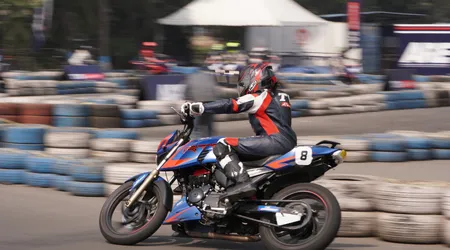
A frase Women in Early Motorcycle Racing still surprises people, which says a lot about how effectively the narrative was narrowed over time.
Women were participating in motorcycle competitions as early as the 1910s and 1920s across Europe and the United States.
They entered endurance runs, dirt-track races, reliability trials, hill climbs, and exhibition events. Some rode independently.
Others became recognizable public figures in traveling racing circuits.
The conditions they faced were brutal by modern standards. Early motorcycles were physically demanding machines—heavy, unstable, mechanically unpredictable.
Roads were uneven. Protective equipment barely existed. Crashes were not rare interruptions; they were woven into the culture of racing itself.
That context matters because it strips away the romantic filter often attached to early motorsport.
These women were not entering polished competitions with sponsorship deals and carefully managed media exposure.
They were stepping into loud, dangerous environments that most people—regardless of gender—would have avoided entirely.
There’s a tendency to imagine historical female riders as symbolic figures first and competitors second.
That interpretation misses the point. Many of them raced because they genuinely loved motorcycles.
The rebellion came naturally afterward.
++ A História do “Papamóvel”: Como os Carros do Vaticano Evoluíram
Why Were Female Riders Pushed Out of Historical Memory?
The disappearance of Women in Early Motorcycle Racing from mainstream historical narratives did not happen through one dramatic act.
It happened gradually, through repetition, omission, and framing.
Early newspapers often covered female riders with a strange mix of fascination and condescension. Articles focused on appearance, clothing, or “shock value” instead of technical ability.
A male racer breaking endurance records became evidence of skill.
A female racer doing something similar was frequently described as unusual entertainment.
That distinction shaped memory in subtle ways. Over time, novelty fades faster than achievement. Once the headlines disappeared, many women riders disappeared with them.
There’s also a deeper institutional layer that rarely gets discussed enough.
As motorcycle racing became increasingly commercialized after World War II, professional opportunities narrowed around male-centered sponsorship structures and racing organizations.
Female riders were not always formally banned, but exclusion does not need to be explicit to become effective.
History behaves strangely when power controls documentation.
Certain figures become larger with every retelling, while others slowly dissolve into the background like old paint fading under garage lights.
++ Por que o carro favorito de Jay Leno era um carro a vapor?
How Did Women Compete in a Hostile Racing Culture?
The reality surrounding Women in Early Motorcycle Racing was harsher than modern audiences sometimes realize.
Many riders lacked factory support, financial backing, or professional teams. Some traveled long distances alone between events carrying spare parts and tools themselves.
Others learned motorcycle mechanics out of necessity because relying on outside assistance simply was not realistic.
That mechanical knowledge is one of the most overlooked aspects of this history. Early motorcycles constantly demanded repairs and adjustments.
Riders needed to understand engines intimately. The stereotype that women lacked technical ability collapses almost immediately once the actual records are examined carefully.
There’s something revealing in that contradiction.
Motorcycle culture often celebrates independence and resilience, yet historical narratives frequently minimized women who embodied both qualities most visibly.
A useful analogy comes to mind here: early motorcycle racing resembled an unfinished industrial bridge shaking under its own weight. Every rider crossing it accepted uncertainty.
Women entering that environment were not asking politely for permission.
They were already moving forward while society debated whether they belonged there at all.
++ Por que o Citroën DS era chamado de “Nave Espacial sobre Rodas”
Which Riders Quietly Changed Motorcycle History?
Several names connected to Women in Early Motorcycle Racing deserve far more attention than they usually receive.
Bessie Stringfield and the Meaning of Endurance
Bessie Stringfield remains one of the most extraordinary figures in American motorcycling history.
During the 1930s and 1940s, Stringfield completed multiple long-distance motorcycle journeys across the United States despite facing both racial segregation and hostility toward female riders.
Traveling alone under those conditions required more than courage. It required constant adaptability.
What makes her story resonate decades later is its refusal to fit neatly into mythology.
She was not performing rebellion theatrically. She rode because riding itself represented freedom in a society structured to restrict it.
That distinction gives her story emotional weight that polished modern branding campaigns often fail to replicate.
Dot Robinson and Competitive Legitimacy
Dot Robinson helped reshape the visibility of women riders through competition and organization.
She competed in endurance events, challenged assumptions surrounding women’s physical ability, and co-founded communities for female motorcyclists at a time when many riders still struggled to be taken seriously inside racing culture.
What often gets overlooked is how important those communities became. Motorsport history tends to glorify isolated heroes, but cultural survival rarely works that way.
Networks matter. Encouragement matters. Visibility matters.
Without those support systems, many stories connected to Women in Early Motorcycle Racing might have vanished even more completely than they already did.
Real Stories That Reveal the Forgotten Side of Racing
Riding the Wooden Walls
In the 1920s, some female riders competed in motordrome events—races held on steep wooden tracks where motorcycles climbed almost vertically along the walls.
The tracks were dangerous enough to earn grim nicknames.
Crashes frequently caused severe injuries. Spectators attended partly because the events felt unpredictable and reckless.
Yet women still raced there.
That image unsettles modern assumptions about the past.
Society often portrayed women as fragile or overly delicate during that era, while some were simultaneously racing motorcycles across collapsing wooden structures at terrifying speeds.
History becomes harder to simplify once details like that surface.
Mechanical Skill Under Pressure
A female endurance rider competing during the 1930s reportedly repaired her own motorcycle during a reliability event after male competitors assumed she would abandon the race due to engine trouble.
That small detail reveals something larger than determination. It exposes how deeply competence itself was gendered inside motorsport culture.
Many women riders were forced into a strange position where ordinary capability became extraordinary simply because observers did not expect it from them.
That distortion still echoes in parts of automotive culture today, though often in quieter forms.
Why This History Still Feels Relevant Today
The story of Women in Early Motorcycle Racing matters because it changes how motorcycle culture is interpreted in the present.
Modern discussions sometimes frame women riders as newcomers gradually entering a historically male environment. But the historical record tells a different story.
Women were present near the beginning of motorcycle racing itself. The issue was visibility, not absence.
There’s also something culturally revealing about which stories become mainstream and which remain niche historical curiosities.
Motorsport mythology celebrates danger, speed, endurance, and independence—qualities these women demonstrated constantly.
Yet many remained sidelined because their presence complicated the narrative people expected to hear.
According to data from the Motorcycle Industry Council, female motorcycle ridership in the United States has continued growing steadily over recent decades.
That trend is not inventing a new connection between women and motorcycles. In many ways, it is reconnecting with an older one that history partially buried.
And perhaps that is why these stories feel strangely modern despite being over a century old.
They expose how selective memory can shape entire industries without most people noticing.
Comparison Table: Myth vs Historical Reality
| Common Assumption | Historical Reality |
|---|---|
| Motorcycle racing was exclusively male | Women competed from the earliest decades of organized racing |
| Female riders only appeared in exhibitions | Many participated seriously in endurance and competition events |
| Women lacked mechanical expertise | Riders frequently repaired and maintained their own motorcycles |
| Women entered motorcycle culture recently | Female riders have been active in motorcycling for more than a century |
| Early racing culture excluded all women completely | Women participated despite social and institutional resistance |
Perguntas frequentes (FAQ)
| Pergunta | Responder |
|---|---|
| What does Women in Early Motorcycle Racing refer to? | It refers to female riders involved in motorcycle competitions during the early twentieth century. |
| Were women officially allowed to compete? | Some events allowed participation, though restrictions varied depending on region and organization. |
| Did female riders race professionally? | Yes. Some competed in endurance races, dirt-track events, and exhibition circuits professionally. |
| Why were many female racers forgotten historically? | Media bias, unequal coverage, and institutional barriers contributed heavily to their disappearance from mainstream narratives. |
| Were women mechanically skilled during early racing history? | Many riders developed strong technical knowledge because early motorcycles required constant maintenance and repair. |
| Is female participation in motorcycling still growing? | Yes. Female ridership has increased steadily in several countries over recent decades. |