
Motorcycle vs Scooter in 2026: Which One Saves You More?
Anúncios
Motorcycle vs Scooter in 2026!
In the fast-evolving world of two-wheeled transportation, deciding between a motorcycle and a scooter in 2026 boils down to more than just style—it’s about smart savings in an era of rising fuel prices, electric innovations, and urban gridlock.
As cities grow denser and sustainability becomes non-negotiable, this comparison reveals surprising ways each option can stretch your budget further.
Anúncios
Keep reading!
Motorcycle vs Scooter in 2026: What Topics Will We Cover in This Guide?
- What Are the Main Differences Between Motorcycles and Scooters in 2026?
Exploring design, performance, and tech evolutions. - How Do Fuel Efficiency and Running Costs Compare?
Breaking down mileage, energy use, and long-term savings. - What Makes Maintenance and Ownership Costs Vary?
Analyzing repairs, parts, and durability factors. - Why Choose One for Urban Commuting Over the Other?
Weighing practicality in city life with real-world scenarios. - Frequently Asked Questions
Addressing common doubts in a clear table format.
What Are the Main Differences Between Motorcycles and Scooters in 2026?
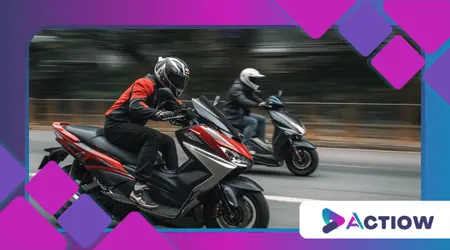
First and foremost, motorcycles in 2026 have embraced a bold fusion of power and eco-friendliness, with many models shifting toward hybrid or fully electric systems that deliver torque without the traditional roar.
However, scooters maintain their edge in simplicity, often featuring step-through frames that make mounting effortless, especially in stop-and-go traffic.
Moreover, while motorcycles boast larger engines—typically ranging from 250cc to over 1000cc for gas versions—scooters stick to compact 50cc to 300cc setups, prioritizing ease over raw speed.
In addition, the tech landscape has transformed both, but differently.
For instance, motorcycles now integrate advanced rider aids like adaptive cruise control and connectivity apps for route optimization, which can indirectly save on fuel by suggesting efficient paths.
On the other hand, scooters excel in built-in storage and lightweight builds, often under 200 pounds, making them ideal for quick errands without the bulk.
Furthermore, with the rise of electric variants, motorcycles like those from LiveWire offer extended ranges up to 150 miles per charge, whereas scooters from brands like Apollo focus on shorter, 50-mile bursts suited for daily commutes.
++ Mazda CX-5 vs Subaru Forester: Winter Driving Comparison Beyond AWD Marketing
Nevertheless, these differences extend to user experience.
Motorcycles demand more skill, with manual gears that engage riders actively, potentially leading to a more immersive ride but also higher fatigue on long trips.
Scooters, conversely, use automatic CVT transmissions for seamless acceleration, reducing the learning curve for beginners.
Additionally, in 2026’s regulatory environment, scooters often qualify for lighter licensing requirements in many regions, saving time and money on training.
Overall, understanding these distinctions helps pinpoint which aligns with your lifestyle, ensuring savings aren’t just financial but also in effort and convenience.
How Do Fuel Efficiency and Running Costs Compare?
To begin with, fuel efficiency in 2026 heavily favors electric and hybrid models across both categories, but scooters often pull ahead in urban scenarios due to their lighter weight and optimized low-speed performance.
For example, a typical electric scooter might achieve 100-150 MPGe (miles per gallon equivalent), sipping energy at a fraction of gas costs.
++ Protecting Leather Seats from Wear with Eco-Friendly Products
In contrast, motorcycles, even efficient ones like the Suzuki GSX-R series, hover around 40-60 MPG for gas models, though electrics push boundaries with 80-100 MPGe.
Therefore, if your daily route involves frequent starts and stops, a scooter’s design minimizes energy waste.
Moreover, running costs reveal stark savings potentials.
Electric motorcycles can slash fuel expenses by 50-70% compared to gasoline counterparts, potentially saving riders up to $2,500 annually on energy alone.
However, scooters amplify this with lower initial purchase prices—often starting at $2,000 for basics versus $5,000+ for motorcycles—translating to quicker ROI through reduced charging bills.
In addition, with electricity rates averaging $0.15 per kWh in many areas, recharging a scooter for 50 miles might cost under $1, while a motorcycle’s larger battery could double that, though both beat gas at $4 per gallon.
Furthermore, consider an original example: Imagine Alex, a delivery driver in a bustling city like New York, switching from a 250cc motorcycle to a 125cc electric scooter.
Previously, Alex spent $150 monthly on gas; now, charging at home drops it to $30, freeing up funds for upgrades.
On the flip side, for highway commuters, motorcycles’ aerodynamics provide better efficiency at higher speeds, potentially saving more on longer trips.
Nevertheless, in 2026, incentives like tax credits for electrics—up to $7,500 federally—tip the scales, making initial costs more comparable and amplifying long-term savings.
| Aspect | Motorcycle (Average 2026 Model) | Scooter (Average 2026 Model) |
|---|---|---|
| Fuel Efficiency (Gas) | 40-60 MPG | 50-80 MPG |
| Electric Range | 100-150 miles | 50-100 miles |
| Monthly Running Cost (Urban, 500 miles) | $50-80 (Electric) | $20-40 (Electric) |
| Initial Purchase Price | $5,000-$15,000 | $2,000-$6,000 |
What Makes Maintenance and Ownership Costs Vary?
Initially, maintenance for scooters in 2026 remains straightforward and budget-friendly, thanks to fewer moving parts in their compact designs.
For instance, oil changes and brake replacements often cost 20-30% less than for motorcycles, with scooters requiring service every 3,000-5,000 miles versus 2,000-4,000 for bikes.
Additionally, electric scooters eliminate oil entirely, cutting routine costs by half.
However, motorcycles’ robust builds mean they handle wear better over time, potentially reducing frequent fixes if ridden responsibly.
In comparison, ownership costs factor in insurance and depreciation.
++ How Cars and Motorcycles Are Being Adapted for Hybrid Work
Scooters typically insure for $100-200 annually due to lower risk profiles, while motorcycles might hit $300-500, especially sport models.
Moreover, with the electric shift, both see savings—30-50% lower maintenance for electrics overall—but scooters benefit more from modular batteries that are easier to swap.
Furthermore, think of it like this analogy: Owning a motorcycle is akin to maintaining a sports car, where performance parts add thrill but hike bills, whereas a scooter mirrors a reliable bicycle, simple and cheap to fix.
On top of that, longevity plays a role.
Motorcycles can last 50,000-100,000 miles with proper care, outpacing scooters’ 30,000-60,000-mile lifespan, which might mean earlier replacement costs for the latter.
Nevertheless, in urban settings, scooters’ lighter stress leads to fewer breakdowns.
For an original example, consider Sarah, a teacher commuting 10 miles daily: Her scooter’s annual maintenance tallies $200, including tire swaps, versus a friend’s motorcycle at $400 due to chain adjustments.
Thus, over five years, Sarah saves $1,000, highlighting how usage patterns dictate true costs.
Why Choose One for Urban Commuting Over the Other?
Primarily, for city dwellers in 2026, scooters shine in maneuverability, slipping through traffic like a fish in a stream, saving precious time that translates to indirect financial gains.
However, motorcycles offer stability on varied roads, making them preferable for mixed urban-suburban routes where speed limits climb.
In addition, with congestion charging zones expanding in places like London and Singapore, scooters’ compact size often qualifies for exemptions or lower fees, adding to savings.
Furthermore, comfort and storage tip toward scooters for short hops.
Their upright seating reduces back strain, and under-seat compartments hold groceries or helmets effortlessly.
On the contrary, motorcycles require add-ons like saddlebags, increasing upfront costs.
Moreover, in the electric era, scooters charge faster—often in 2-4 hours versus 4-6 for motorcycles—fitting seamlessly into busy schedules.
But what if your commute involves rain-slicked streets? That’s where a motorcycle’s larger tires provide better grip, potentially preventing costly accidents.
Additionally, engagement comes into play: Why settle for mundane transport when a motorcycle’s thrill could make your daily grind enjoyable, boosting mental well-being and productivity?
This rhetorical question underscores the non-monetary savings.
Nevertheless, for pure efficiency, scooters win in packed metros.
As per trends, hybrid scooters blending gas and electric are surging, offering 80-100 MPG equivalents for versatile urban use.
| Urban Factor | Motorcycle Advantages | Scooter Advantages |
|---|---|---|
| Traffic Navigation | Better for highways | Superior in tight spots |
| Storage | Add-ons available | Built-in compartments |
| Charging Time (Electric) | 4-6 hours | 2-4 hours |
| License Requirements | Often full motorcycle license | Lighter or none for small models |
Frequently Asked Questions
| Question | Answer |
|---|---|
| Is a scooter cheaper to insure than a motorcycle in 2026? | Yes, typically by 30-50%, due to lower speeds and risk assessments. However, electrics for both can qualify for green discounts. |
| Can I use a scooter for long-distance travel? | It’s possible but less ideal; motorcycles handle highways better with more power and range. For commutes under 50 miles, scooters suffice. |
| What about electric vs gas in terms of savings? | Electrics save 50-70% on fuel, but factor in battery replacement every 5-7 years, costing $500-1,000 for scooters versus $1,000-2,000 for motorcycles. |
| Are there tax incentives for buying in 2026? | Absolutely—up to $7,500 federal credits for qualifying electrics, plus state rebates that can make scooters nearly free after incentives. |
| Which is safer in urban areas? | Scooters for beginners due to ease, but motorcycles with ABS systems offer advanced safety. Always prioritize helmets and training. |
In conclusion, while motorcycles deliver versatility and excitement, scooters often edge out in pure savings for 2026’s urban warriors, especially with electric advancements.
Ultimately, your choice hinges on daily needs—crunch the numbers, test ride, and ride smart.