
टोयोटा प्रियस बनाम होंडा इनसाइट: दैनिक ड्राइविंग के लिए सबसे कुशल हाइब्रिड कौन सी है?
Anúncios
Toyota Prius vs Honda Insight remains a pivotal comparison for drivers seeking maximum efficiency, even as the automotive landscape shifts toward full electrification in 2026.
While the Honda Insight nameplate has pivoted toward an electric crossover SUV concept, the spirit of the hybrid rivalry endures in the used market and through legacy comparisons.
Choosing between these icons requires understanding the trade-offs between proven hybrid efficiency and modern electric innovation.
Anúncios
The Toyota Prius continues to set the benchmark for fuel economy, boasting up to 57 MPG combined in its current fifth-generation iteration.
Conversely, the final internal-combustion Honda Insight models remain highly sought after for their refined, sedan-like comfort and balanced driving dynamics.
This guide navigates the nuances of these vehicles to help you determine which best fits your daily commute requirements.
Quick Comparison at a Glance
- Prius: Unmatched efficiency and modern tech suite.
- Insight: Upscale interior comfort and smooth handling.
- Market Context: Prius remains a new staple; Insight has evolved into an EV.
- इसके लिए सर्वोत्तम: Daily commuters prioritizing long-term savings.
Evaluating the Hybrid Legacy and Modern Evolution
The Toyota Prius Performance Profile
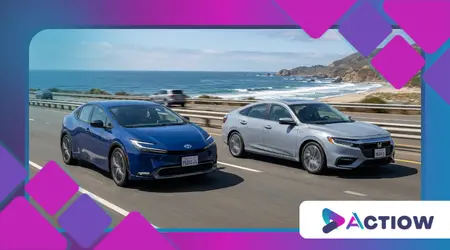
The 2026 Toyota Prius stands as a testament to hybrid longevity, utilizing a robust 2.0-liter four-cylinder engine.
It generates 194 horsepower, providing a peppy experience that defies its “economy car” reputation.
With Electronic On-Demand All-Wheel Drive available, it manages adverse weather with ease, unlike many of its predecessors.
Drivers today appreciate the 57 MPG combined rating, which keeps fuel costs impressively low in an era of fluctuating energy prices.
The integration of wireless connectivity and a comprehensive safety suite makes it a top-tier choice for tech-savvy commuters.
It is truly the gold standard for those who aren’t ready to jump to full battery-electric vehicles.
The Honda Insight’s Strategic Shift
Honda recently reintroduced the Insight nameplate in 2026, but it has undergone a radical transformation.
It is no longer the hybrid sedan you remember; it has returned as a sleek, all-electric crossover SUV.
This evolution reflects the market’s aggressive move toward full electrification, distancing itself from the traditional hybrid competition.
While it lacks the internal combustion engine of the past, the new Insight delivers a 500 km range per charge.
It serves a different demographic those who want the Honda badge and utility but demand zero emissions.
This leaves the Toyota Prius vs Honda Insight comparison as a battle between a veteran hybrid and a fresh, bold electric challenger.
++ टेस्ला मॉडल वाई बनाम किआ ईवी6: 2026 में कौन सी इलेक्ट्रिक एसयूवी बेहतर होगी?
Bridging the Efficiency Gap
Efficiency is often measured in dollars saved over the vehicle’s lifespan.
Studies show that hybrid owners, like those driving the Prius, save approximately $1,500 more on fuel annually compared to the average gasoline sedan.
These savings are the engine behind the popularity of these models, regardless of the drivetrain.
Think of the comparison like choosing between a high-efficiency manual pump and a modern automated system.
One is a classic, perfected tool; the other is a step into the future of automated convenience. Both aim to get you to your destination with the least amount of wasted energy.
Key Technical Differences in Daily Driving
Fuel Economy vs. Charging Convenience
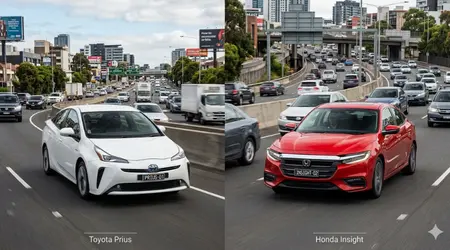
The Prius thrives in long-range scenarios where gas stations are the only infrastructure you need.
You simply fill up and continue your day without planning around charging stops. It remains the king of simplicity for the average driver who values time over everything else.
The new electric Insight, however, requires a paradigm shift in how you plan your day.
While it offers impressive range, it demands that you manage your charging sessions thoughtfully.
For urbanites with home charging, this is rarely an issue; for others, it is a significant lifestyle adjustment.
यह भी पढ़ें: ADAS सेंसर की गलत संरेखण से असुरक्षित ड्राइविंग त्रुटियां कैसे होती हैं
Interior Comfort and Utility
Toyota has prioritized a futuristic cabin design that feels minimalist yet highly functional. The 60/40 split-fold rear seats and generous cargo capacity make it surprisingly practical for weekend errands.
It balances aesthetic appeal with the raw utility that long-time owners have come to expect.
Honda’s new electric offering brings a cabin designed for “enclosure and comfort,” emphasizing soft-touch materials and ambient lighting.
It feels more like a lounge than a cockpit, prioritizing the passenger experience. Each brand has successfully carved out its own definition of what a modern daily driver should feel like.
और पढ़ें: मर्सिडीज सीएलए ईवी बनाम टेस्ला मॉडल 3: 2026 के लिए सर्वश्रेष्ठ इलेक्ट्रिक सेडान कौन सी है?
Reliability and Maintenance
Reliability is where both manufacturers historically shine, though they achieve it through different philosophies.
Toyota’s hybrid system is legendary for surviving well over 200,000 miles with standard maintenance. This reputation is why many buyers continue to choose the Prius even when cheaper alternatives exist.
Honda’s transition to an all-electric platform aims to reduce mechanical complexity, potentially lowering long-term maintenance costs.
Fewer moving parts mean fewer points of failure, which could eventually redefine the brand’s reliability metrics. Is it safer to stick with the tried-and-true hybrid, or embrace the simplified future of EVs?
Data-Driven Decisions for the Modern Commuter
Comparative Metrics Table
| विशेषता | 2026 Toyota Prius (Hybrid) | 2026 Honda Insight (EV) |
| Primary Power | 2.0L I4 Hybrid | Battery Electric |
| Efficiency/Range | 57 MPG Combined | 311 Miles (approx) |
| ड्राइवट्रेन | FWD / Optional AWD | RWD (EV Platform) |
| Cargo Space | 23.8 cu. ft. | Variable Crossover Space |
| Ideal Use Case | Long commutes/No home charger | Urban commuting/Home charging |
Why Data Favors the Hybrid for Some
In 2026, the cost of electricity and gasoline fluctuates wildly depending on the region.
A study by the American Automotive Association suggests that hybrid vehicles still offer the lowest “cost-per-mile” in states with high utility rates.
For these drivers, the Toyota Prius vs Honda Insight debate is easily settled by looking at local energy pricing.
It is a mistake to ignore the infrastructure hurdles that still exist in many rural areas.
While EVs are the future, the hybrid remains the bridge that allows current drivers to maintain their lifestyle without stress. Every driver must weigh their personal access to charging before choosing a path.
Long-Term Value Retention
The Toyota Prius vs Honda Insight rivalry also highlights how differently these cars hold their value. The Prius is a commodity in the used market, meaning it is easy to sell but also easy to find.
The new Insight EV is entering a competitive, fast-changing segment where resale values are harder to predict.
By choosing a hybrid, you are investing in a known quantity with a predictable depreciation curve.
By choosing an EV, you are investing in early-adopter tech that may offer more comfort but comes with higher market uncertainty. Consider your financial goals before making the final commitment to either model.
Which Path Should You Choose?
Selecting the right vehicle depends entirely on your daily routine. If your priority is the freedom to drive long distances without ever worrying about a plug, the Toyota Prius is the clear winner.
It remains a masterpiece of efficiency, offering a seamless experience that has defined the hybrid segment for decades.
For those who want to transition away from fossil fuels and have access to home charging, the new Honda Insight EV is a compelling, stylish alternative.
It signals a bold shift in how we view the brand. Whether you choose the reliable hybrid or the forward-thinking electric crossover, your decision should align with your lifestyle needs. Share your experience in the comments below!
अक्सर पूछे जाने वाले प्रश्नों
Is the Honda Insight still a hybrid?
No, the 2026 model has been rebranded as a fully electric crossover SUV.
Which car is more fuel-efficient?
The Prius remains the leader in MPG, while the Insight EV uses zero gasoline.
Does the Prius have AWD?
Yes, the 2026 Toyota Prius offers an optional Electronic On-Demand All-Wheel Drive system.
Is the Prius hard to maintain?
No, it is widely considered one of the most reliable vehicles on the market today.
Which is better for long road trips?
The Prius is generally superior for road trips due to the vast network of gas stations compared to charging infrastructure.