
Motos électriques ou à essence pour les trajets quotidiens
Annonces
Motos électriques ou à essence pour les trajets quotidiens Il ne s'agit pas d'une confrontation abstraite entre le futur et le passé.
C'est la différence entre glisser dans les embouteillages du matin dans un silence quasi total et ressentir le grondement familier du moteur à combustion sous soi à chaque fois que le feu passe au vert.
Les deux peuvent vous emmener au travail. Les deux peuvent vous faire sourire. Mais c'est la façon dont elles s'intègrent au déroulement régulier et monotone d'un trajet en semaine qui est au cœur du débat.
Annonces
Poursuivez votre lecture pour en savoir plus !
Résumé des sujets abordés
- Qu’est-ce qui différencie réellement les véhicules électriques des véhicules à essence au quotidien ?
- Comment les coûts réels se répartissent-ils au fil du temps ?
- Performance et autonomie : qu’est-ce qui compte quand on essaie juste d’y arriver ?
- Pourquoi l'électrique semble souvent être le choix urbain le plus judicieux actuellement
- Deux cavaliers, deux choix, une ville
- Foire aux questions
Qu’est-ce qui différencie réellement les véhicules électriques des véhicules à essence au quotidien ?
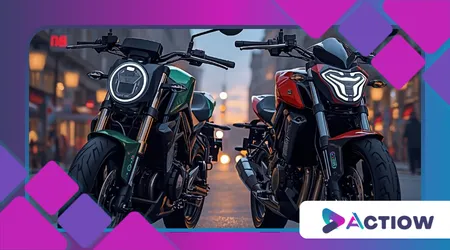
Les motos électriques éliminent les intermédiaires. Pas d'embrayage, pas de boîte de vitesses, pas de bruit d'échappement : juste un moteur qui délivre du couple instantanément.
Des motos comme la Zero SR/F ou la plus récente LiveWire S2 donnent l'impression d'être presque en apesanteur dans les embouteillages, car il n'y a rien à gérer à part l'accélérateur et les freins.
Les motos à essence — la Honda NC750X, la Yamaha MT-07, la Kawasaki Z500 — vous invitent à participer.
Vous changez de vitesse, vous écoutez le régime moteur, vous sentez le moteur respirer.
Cette pratique est addictive pour certains cyclistes et épuisante pour d'autres lorsque le trajet domicile-travail se résume à quarante minutes de feux rouges.
La source d'énergie est la faille silencieuse. Branchez-vous à la maison ou au bureau et vous saurez exactement combien coûtera votre “ carburant ” de demain.
Arrivez à une station-service et le prix aura peut-être augmenté de 15 centimes du jour au lendemain.
Dans les villes dotées de zones à faibles émissions ou d'un péage urbain (Londres, Milan, et de plus en plus São Paulo), le choix de l'électrique commence à paraître moins idéaliste et plus pragmatique.
Il y a aussi une dimension sociale sous-jacente. Les motos à essence conservent le poids culturel de la liberté, du bruit et d'une âme mécanique.
Les appareils électriques sont parfois considérés comme de simples appareils sur roues.
++ Comparatif des véhicules électriques d'entrée de gamme pour les primo-accédants
Cette perception commence à s'effriter en 2026, notamment chez les jeunes cyclistes qui ont grandi avec les smartphones et pour qui le silence est normal, et non ennuyeux.
++ Les meilleures voitures urbaines de 2026 selon le stationnement et la visibilité
Comment les coûts réels se répartissent-ils au fil du temps ?
Le prix des véhicules électriques est encore plus surprenant. Une moto électrique correcte pour les trajets quotidiens coûte entre 14 000 et 22 000 roupies, tandis qu'une moto à essence de 500 à 650 cm³ performante est disponible pour 7 000 à 11 000 roupies.
Mais la situation se renverse rapidement une fois à cheval.
La recharge à domicile coûte actuellement entre 3 et 6 centimes par mile dans la plupart des endroits. L'essence, même avec une consommation économique de 60 miles par gallon (mpg), coûte plutôt entre 12 et 18 centimes, selon les prix à la pompe locaux.
Sur plus de 12 000 miles par an, cet écart peut facilement atteindre $1 200. L'entretien est le véritable fléau pour l'essence : vidange d'huile tous les 3 000 à 5 000 miles, contrôles des soupapes, réglages de la chaîne, usure plus rapide des pneus due au patinage de l'embrayage et à la chaleur.
Côté électricité ? Les plaquettes de frein durent plus longtemps grâce au freinage régénératif, pas de liquide à changer, pas de filtre à air à encrasser.
Les chiffres réels des propriétaires à long terme indiquent que l'entretien électrique est de 40 à 65% de moins.
Des incitations existent encore sur de nombreux marchés : crédits fédéraux, remises d’État, réductions des services publics sur les équipements de recharge.
Le seuil de rentabilité pour un utilisateur quotidien se situe généralement entre 2,5 et 4 ans. Après cette période, la voiture électrique est nettement plus avantageuse que son équivalent à essence.
Comparaison rapide des modèles de véhicules utilitaires typiques de 2026 :
| Catégorie | Électrique (LiveWire S2 / Zero S) | Essence (Honda CB500X / Yamaha MT-07) |
|---|---|---|
| Prix de base | $15 500–$21 000 | $7 800–$11 200 |
| “Coût du carburant / 10 000 miles | $250–$450 | $900–$1400 |
| entretien annuel estimé. | $150–$300 | $400–$700 |
| Économies sur 5 ans de possession | ~$4 000–$7 000 | — |
Performance et autonomie : qu’est-ce qui compte quand on essaie juste d’y arriver ?
Le couple électrique est tout simplement exceptionnel. Passer de 0 à 100 km/h en moins de quatre secondes sur un modèle de milieu de gamme donne l'impression de tricher lorsqu'on se faufile entre les voitures à 65 km/h.
Les motos à essence ont besoin de monter dans les tours pour démarrer ; elles récompensent la patience. Dans un trafic dense, cette patience peut vite se transformer en frustration.
L'autonomie est le principal argument contraire. Une bonne voiture électrique pour les trajets quotidiens offre une autonomie réelle de 190 à 290 kilomètres.
Largement suffisant pour la plupart des trajets quotidiens, mais insuffisant si vous oubliez de recharger ou si vous décidez de profiter du coucher de soleil après le travail.
Les réservoirs d'essence offrent généralement une autonomie de 290 à 450 kilomètres et un plein se fait en cinq minutes. Pour les motards dont les journées sont imprévisibles, cette sécurité reste un atout précieux.
En revanche, la plupart des gens ne parcourent pas 320 kilomètres en une seule journée pour se rendre au travail. Aux États-Unis, le trajet domicile-travail en moto fait en moyenne entre 40 et 55 kilomètres aller-retour.
L'infrastructure électrique rattrape son retard : bornes de recharge sur les lieux de travail, accords avec les immeubles d'appartements, stations de destination.
Le débat sur la gamme de produits évolue lentement de la question “ est-ce possible ? ” à celle de “ est-ce pratique ? ”.”
N'est-ce pas étrange comme quelque chose d'aussi simple que le silence peut changer complètement l'ambiance d'un trajet de retour à la maison ?
Pourquoi l'électrique semble souvent être le choix urbain le plus judicieux actuellement
Les villes deviennent plus bruyantes, plus sales et l'air y est plus cher.
Les motos électriques éliminent votre contribution personnelle à cette équation : pas de pot d'échappement, pas de gaz d'échappement au ralenti aux feux rouges, pas de cliquetis de soupapes résonnant contre les bâtiments à 7 heures du matin.
Cela compte plus que les gens ne le reconnaissent lorsqu'on vit dans un quartier densément peuplé.
Le freinage régénératif transforme les embouteillages en une extension de l'autonomie, chose que l'essence ne peut reproduire.
Dans les villes vallonnées, la récupération d'énergie est notable ; on rentre chez soi avec plus d'autonomie qu'au départ.
Les motos à essence consomment du carburant en descente.
Les politiques publiques jouent également un rôle déterminant. Zones à faibles émissions, restrictions sonores, avantages de stationnement pour les véhicules zéro émission : les véhicules électriques accumulent discrètement des avantages que les véhicules à essence ne peuvent égaler.
L'argument n'est pas que l'essence est morte ; c'est que l'électrique commence à s'imposer comme la norme pour tous ceux qui roulent principalement en ville.
Deux cavaliers, deux choix, une ville
Rafael travaille dans le secteur technologique à Belo Horizonte. Son trajet fait 51 kilomètres aller-retour, principalement plat, avec de nombreux feux de circulation. Il est passé d'une CB500F à une Zero S l'année dernière.
Fini les gouttes d'huile du lundi matin sur le sol du garage, la recharge lui coûte 12 R$ par semaine, et le couple instantané rend la circulation dans les voies aux heures de pointe sans effort.
Il affirme que le silence lui permet d'écouter correctement des podcasts pour la première fois depuis des années. Économies nettes après deux ans : environ 9 000 R$.
Carla enseigne au lycée de Curitiba. Elle parcourt 77 kilomètres par jour, avec quelques côtes, et s'offre parfois des escapades le week-end sur la côte. Elle est restée fidèle à sa Versys-X 300.
Des arrêts essence de cinq minutes quand elle est en retard, plus besoin de s'inquiéter de trouver une borne de recharge sous la pluie, et elle adore le bruit du bicylindre parallèle les matins frais.
L'entretien est pénible mais prévisible. Elle n'est pas encore convaincue que la cuisinière électrique suffirait à pallier ses imprévus.
Aucun des deux n'a tort. Ils vivent simplement différentes versions de la même vie.
Foire aux questions
Les vraies questions que se posent les motards lorsqu'ils sont dans leur garage, face à ces deux options :
| Question | Réponse directe |
|---|---|
| Quelle est la durée de vie des batteries de motos électriques ? | Durée de vie de 8 à 12 ans / 128 000 à 240 000 km en utilisation normale. La plupart sont assortis d'une garantie de 5 ans. |
| Sont-ils sûrs en cas de fortes pluies ? | Oui, moteurs et batteries étanches. Évitez simplement les eaux stagnantes profondes, comme pour n'importe quel vélo. |
| Temps de charge pour un trajet domicile-travail quotidien ? | Niveau 2 (domicile/travail) = 1 à 3 heures pour 80 à 100%. Le niveau 1 pendant la nuit est généralement suffisant. |
| Les motos à essence ont-elles toujours une meilleure valeur de revente ? | Pour l'instant, oui, mais l'écart se réduit rapidement sur les marchés proposant des incitations importantes en faveur des véhicules électriques. |
| Les frais d'entretien sont-ils vraiment beaucoup moins élevés ? | Oui. Pas d'huile, pas de lubrification de la chaîne tous les 800 km, pas de réglage des soupapes. Les freins durent plus longtemps aussi. |
Vous voulez aller plus loin ?
Commencez par Analyse détaillée de la gamme électrique actuelle pour motocyclistes, Essais de véhicules électriques pour trajets domicile-travail réalisés par MCN en conditions réelles, et Comparatif détaillé de RevZilla sur la possession d'un véhicule essence ou électrique.