
BMW M3 vs Audi RS5: Which Sports Sedan Feels More Complete?
إعلانات
BMW M3 vs Audi RS5: Which Sports Sedan Feels More Complete? This question dominates modern automotive debates, tracking back through decades of intense track-bred rivalry.
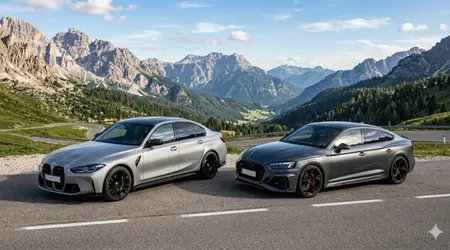
As we navigate through 2026, the current generation G80 M3 Competition and the refined B10-generation RS5 Sportback represent two fundamentally distinct philosophies of high performance.
While one brand prioritizes absolute driver engagement, the other champions relentless, all-weather confidence.
إعلانات
Choosing between these titans requires a deep dive into engineering metrics, real-world dynamics, and daily usability.
أهم النقاط
- Dynamic Focus: The BMW M3 excels in rear-biased, track-ready agility and visceral steering response.
- Daily Stability: The Audi RS5 provides unmatched winter traction, linear power, and a refined cabin layout.
- مقياس الأداء: The M3 offers higher absolute horsepower, while the RS5 delivers immediate low-end torque.
Why Do Driving Dynamics Define These Super Sedans?

How Does the S58 Engine Compare to the Audi TFSI V6?
Under the sculpted hood of the Munich contender lies the legendary S58 twin-turbocharged 3.0-liter inline-six engine.
This powerhouse generates up to 523 horsepower in its latest 2026 Competition xDrive guise, revving with an addictive, metallic urgency toward its redline.
The throttle response is razor-sharp, making the car feel alive, mechanical, and occasionally intimidating in its power delivery.
In contrast, Ingolstadt deploys a 2.9-liter twin-turbo V6 that pumps out 444 horsepower coupled with a robust, instantaneous torque curve.
While it lacks the high-rpm scream of the BMW inline-six, the Audi powerplant delivers its energy with a smooth, linear surge.
It functions like a precise digital instrument, accelerating effortlessly without the dramatic peakiness found in its Bavarian rival.
What Role Do xDrive and Quattro Play in Real-World Grip?
The mechanical soul of the BMW M3 vs Audi RS5 debate often centers on how these machines transfer power to the tarmac.
BMW’s xDrive system is deeply rear-biased, allowing drivers to experience classic tail-out dynamics before the front axle pulls the car straight.
It feels like a traditional sports car that simply happens to possess the safety net of all-wheel drive.
Audi’s legendary Quattro system, enhanced by the available rear sport differential, takes a completely opposite approach to traction.
It glues the chassis to the asphalt, pulling the car through treacherous apexes with zero hesitation or structural drama.
Imagine running on rails during a torrential downpour; that is the distinct confidence the RS5 instills in its driver.
++ مقارنة بين تويوتا بريوس وهوندا: السيارة الهجينة الأكثر كفاءة للقيادة اليومية
Which Transmission Offers Faster Gear Changes?
BMW utilizes a specifically tuned ZF 8-speed automatic transmission that delivers crisp, lightning-fast upshifts that mimic dual-clutch gearboxes.
In its most aggressive Drivelogic setting, each shift hits with a satisfying, visceral jolt that heightens track driving. It rewards manual paddle manipulation, demanding focus from the operator.
Audi also employs an 8-speed Tiptronic automatic, but tunes it to prioritize seamless, fluid transitions over track-day theatrics.
It hunts for the optimal gear imperceptibly during highway commutes, keeping the cabin serene and free from unwanted shift shocks.
However, it can feel slightly hesitant to drop multiple gears when you suddenly demand instant passing power.
How Do Cabin Comfort and Daily Usability Differ?
What Makes the Live Cockpit Superior to Virtual Cockpit?
Step inside the Munich competitor and you are immediately greeted by the massive, curved digital display running the latest iDrive operating system.
The graphics are sharp, the processing speeds are instantaneous, and the M-specific track menus offer incredible depth for data enthusiasts.
It creates a futuristic, fighter-jet ambiance that prioritizes real-time performance telemetry.
Audi’s Virtual Cockpit remains an industry benchmark for clean, minimalist ergonomics and intuitive, distraction-free map integration.
The RS5 cabin eschews overwhelming visual clutter, placing essential data directly in the driver’s natural line of sight.
It feels premium, understated, and remarkably relaxing during exhausting rush-hour commutes across congested metropolitan highways.
اقرأ أيضاً: كيف يؤدي عدم محاذاة مستشعرات أنظمة مساعدة السائق المتقدمة (ADAS) إلى أخطاء قيادة غير آمنة
Why Do Seating Choices Drastically Alter the Experience?
If you opt for the aggressive carbon-fiber bucket seats in the M3, you are choosing track performance over personal comfort.
These seats lock your torso into an unyielding, race-ready position, which is perfect for track days but painful for grocery runs. They require physical gymnastics just to ingress and egress gracefully.
The RS5 counters with beautifully stitched honeycomb leather sport seats that feature heating, ventilation, and built-in massage functions.
They offer excellent lateral support during spirited cornering without bruising your hips during extended weekend road trips.
The Audi treats its occupants like valued guests, whereas the BMW treats them like active racing co-pilots.
اقرأ المزيد: مرسيدس CLA EV مقابل تسلا موديل 3: أفضل سيارة سيدان كهربائية لعام 2026
How Do Cargo Space and Utility Compare for Families?
Evaluating the BMW M3 vs Audi RS5 requires looking past track times and examining practical trunk dimensions.
The M3 offers a traditional, deep sedan trunk that easily accommodates two large suitcases or a set of golf clubs. Its roofline ensures excellent rear headroom for taller adult passengers.
The RS5 Sportback utilizes a clever, sloping rear hatchback design that dramatically opens up the cargo loading area.
Folding the rear seats flat transforms the sleek four-door coupe into an incredibly versatile utility vehicle for hauling bulky items.
Why choose a boring crossover when this sleek silhouette handles cargo so effectively?
Which Car Delivers Better Ownership Value?
What Are the Maintenance Costs and Reliability Realities?
According to recent automotive reliability tracking data, both German manufacturers have significantly improved their electronic architectures over past generations.
The S58 engine has proven to be an incredibly stout, over-engineered block capable of handling immense thermal stress.
However, specialized M-specific brake pads and sticky compound tires will command a premium price at replacement intervals.
Audi’s 2.9-liter V6 shares components with Porsche engineering, ensuring high production standards and robust mechanical longevity.
Preventative maintenance on the Quattro differentials is crucial, but general service costs tend to be slightly more predictable.
The RS5 avoids the extreme component wear associated with the track-focused suspension tuning of its main competitor.
How Well Do These High-Performance Machines Hold Value?
Historical market trends indicate that specialized M cars generally retain a dedicated enthusiast following, stabilizing their long-term resale value.
Limited color options and specific performance packages on the M3 often command premium prices in the secondary enthusiast marketplace. It represents a tangible investment for driving purists.
The RS5 experiences a slightly more conventional luxury depreciation curve over its initial ownership cycle.
Because it appeals to grand touring buyers rather than track day enthusiasts, its market value aligns with premium executive cruisers.
It becomes an incredible pre-owned value proposition for buyers seeking stealthy speed.
What Is the True Fuel Efficiency in Daily Driving?
While fuel economy is rarely the primary purchasing factor for performance vehicles, real-world efficiency impacts daily ownership satisfaction.
The M3 features advanced cylinder coating technologies, but its aggressive tuning encourages high-rpm driving that rapidly drains the fuel tank. Expect single-digit efficiency if you frequently indulge in sport mode.
The RS5 utilizes a clever B-cycle combustion process specifically designed to optimize partial-load efficiency during highway cruising.
This allows the V6 to operate like a much smaller engine when you are simply maintaining highway speeds. It delivers respectable highway range, making it the superior choice for cross-country journeys.
Performance Comparison Data
The following matrix highlights the core technical specifications and real-world performance metrics for both vehicles.
| Feature / Metric | BMW M3 Competition xDrive | Audi RS5 Sportback |
| نوع المحرك | محرك سداسي الأسطوانات سعة 3.0 لتر مزود بشاحن توربيني مزدوج | 2.9L Twin-Turbo V6 |
| قوة حصانية | 523 hp | 444 hp |
| عزم الدوران (رطل-قدم) | 479 lb-ft | 442 lb-ft |
| 0-60 mph (sec) | 3.4 seconds | 3.8 seconds |
| نظام نقل الحركة | Rear-Biased AWD (xDrive) | Permanent AWD (Quattro) |
| Chassis Tuning | Rigid / Track-Focused | Compliant / Grand Tourer |
| Cargo Layout | Traditional Sedan Trunk | Hatchback Sportback |
Finding the Complete Sports Sedan
We must conclude this BMW M3 vs Audi RS5 analysis by defining what “complete” truly means to you as a driver.
If your definition of completeness involves lap-time supremacy, visceral steering feedback, and an engine that challenges your skills, the BMW wins. It is an uncompromised racing machine disguised as a practical four-door executive sedan.
However, if a complete car is one that masters every weather condition, pampers your spine during commutes, and carries cargo effortlessly, the Audi triumphs.
The RS5 offers a balanced, stress-free performance envelope that makes it the ultimate daily companion. Choose the M3 to feel the racetrack; choose the RS5 to conquer the real world.
Which philosophy wins your garage? Share your personal driving experiences and preferences in the comments below!
الأسئلة الشائعة
Is the BMW M3 too stiff for comfortable daily commuting?
The M3 features adaptive suspension, but even in comfort mode, the ride remains firm and communicative over broken pavement.
Can the Audi RS5 drift like the BMW M3?
The Quattro system minimizes side-slip, meaning it lacks the easily induced, rear-wheel-drive drift characteristics of the xDrive system.
Which car has a louder factory exhaust note?
The BMW S58 engine delivers a louder, more aggressive rasp, while the Audi V6 offers a deeper, more muted growl.
Are these vehicles suitable for winter driving conditions?
Both cars handle winter exceptionally well when equipped with dedicated snow tires, though Audi’s Quattro provides more initial confidence.