
How Regenerative Braking Changed Motorcycle Maintenance Routines
Anúncios
In the evolving world of two-wheeled transport, regenerative braking stands out as a game-changer, particularly for electric motorcycles.
This technology not only boosts efficiency but also fundamentally alters how riders approach upkeep, making routines simpler and more cost-effective.
Consequently, understanding its role can help enthusiasts adapt to a greener, smarter riding future.
What Topics Will We Cover? A Quick Overview
Anúncios
Before exploring further, here’s an ordered summary of the key sections we’ll discuss:
- What Is Regenerative Braking in Motorcycles? – Defining the basics and its relevance.
- How Does Regenerative Braking Work in Electric Motorcycles? – Breaking down the mechanics.
- Why Has Regenerative Braking Changed Motorcycle Maintenance Routines? – Examining the shifts in upkeep practices.
- What Are the Advantages of Regenerative Braking for Maintenance? – Highlighting benefits for owners.
- How Do Real-World Examples Illustrate These Changes? – Providing original scenarios for insight.
- What Statistics and Analogies Reveal About Its Impact? – Using data and metaphors to deepen understanding.
- Frequently Asked Questions – Addressing common queries in a table.
What Is Regenerative Braking in Motorcycles?
Regenerative braking in motorcycles refers to a system primarily found in electric models that captures kinetic energy during deceleration and converts it back into electrical power.
Unlike traditional friction brakes that dissipate energy as heat, this method recharges the battery, extending range.
++ How One Man Drove from Alaska to Argentina in a VW Beetle
Moreover, it’s integrated into the motor, making it a seamless part of the riding experience.
This technology emerged with the rise of electric vehicles, but its application in motorcycles adds unique dynamics due to their lighter weight and agile handling.
For instance, brands like Zero and Energica have pioneered it, allowing riders to recover energy on downhills or during city stops.
Consequently, it reduces reliance on mechanical components, which traditionally wear out faster.
Furthermore, regenerative braking isn’t just about energy savings; it influences safety and control.
By providing adjustable levels of regen—often via handlebar controls—it offers smoother slowing without aggressive pad clamping.
Therefore, it’s reshaping not only how motorcycles perform but also how they age over time.
How Does Regenerative Braking Work in Electric Motorcycles?
At its core, regenerative braking works by reversing the electric motor’s role.
When you twist the throttle backward or release it, the motor becomes a generator, resisting wheel motion to produce electricity.
++ Mazda CX-5 vs Subaru Forester: Winter Driving Comparison Beyond AWD Marketing
This energy flows back to the battery through the controller, which manages the process efficiently.
As a result, less kinetic energy is wasted, turning stops into subtle recharges.
In practice, sensors detect deceleration and engage the system automatically.
For example, in models with multiple modes, riders can select strong regen for aggressive energy capture or mild for coasting.
However, this requires precise calibration to avoid wheel lockup, especially on slippery surfaces.
Thus, advanced algorithms ensure balance between braking force and energy recovery.
Additionally, the system integrates with conventional brakes for hybrid stopping.
When regen isn’t enough—like in emergencies—the friction pads kick in seamlessly.
Therefore, this dual approach not only enhances efficiency but also minimizes component stress, setting the stage for transformed maintenance habits.
Why Has Regenerative Braking Changed Motorcycle Maintenance Routines?
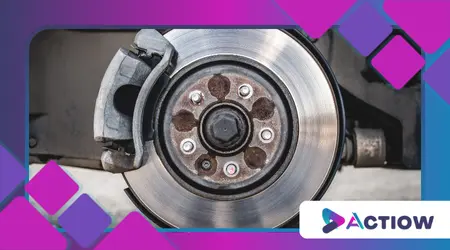
Regenerative braking has changed motorcycle maintenance routines by significantly reducing the frequency of brake pad replacements.
++ Motorcycle vs Scooter in 2026: Which One Saves You More?
Traditional bikes rely heavily on friction, leading to rapid wear from heat and abrasion. In contrast, regen handles much of the deceleration, sparing pads and rotors.
Consequently, owners check brakes less often, shifting focus to battery health instead.
Moreover, this shift extends to overall system inspections.
With fewer mechanical parts under constant strain, routines emphasize software updates and electrical diagnostics rather than physical tweaks.
For instance, what used to be monthly pad checks might now occur quarterly.
However, this doesn’t eliminate maintenance; it evolves it toward preventive electronic monitoring.
Furthermore, the technology influences tire longevity indirectly.
Smoother braking reduces skidding risks, preserving tread. As a result, riders invest more in charging infrastructure checks than in garage overhauls.
Thus, the change fosters a proactive, tech-savvy approach to upkeep.
But what if your motorcycle could essentially maintain itself by recycling its own energy—wouldn’t that redefine your garage time?
What Are the Advantages of Regenerative Braking for Maintenance?
One key advantage is cost savings over time. By extending brake life—often doubling it—regenerative systems cut down on replacement parts.
Additionally, fewer visits to mechanics mean lower labor bills.
Therefore, electric motorcycle owners enjoy budgets that stretch further, reallocating funds to accessories or upgrades.
In addition, environmental benefits tie into maintenance perks. Less waste from discarded pads reduces ecological footprint, appealing to eco-conscious riders.
Moreover, the system’s efficiency means batteries last longer with gentler charge cycles.
As a result, overall vehicle lifespan increases, making investments more worthwhile.
Furthermore, ease of diagnostics stands out. Modern apps connected to the bike provide real-time data on regen performance, alerting users to issues early.
Consequently, problems like motor inefficiency get addressed before escalating.
Thus, advantages compound, turning maintenance from a chore into a streamlined process.
| Maintenance Aspect | Traditional Braking | Regenerative Braking |
|---|---|---|
| Brake Pad Lifespan | 10,000-20,000 miles | 20,000-40,000 miles |
| Inspection Frequency | Monthly | Quarterly |
| Cost per Year | $200-400 | $100-200 |
How Do Real-World Examples Illustrate These Changes?
Take Alex, a urban commuter on a Zero SR/F electric motorcycle. Previously on a gas bike, he replaced pads every 8,000 miles due to stop-and-go traffic.
Now, with regenerative braking handling 70% of his slows, he’s gone 15,000 miles without a swap.
Consequently, his routine shifted to bi-monthly battery checks, freeing weekends for rides rather than repairs.
In another scenario, consider Mia, a touring enthusiast with an Energica Eva Ribelle.
On long downhill stretches, regen recharges her battery while sparing brakes from overheating.
This meant her last maintenance skipped rotor resurfacing entirely, unlike her old touring bike that demanded it annually.
Moreover, she now focuses on software tweaks for optimal regen, enhancing her adventures.
These examples show how regenerative braking adapts to lifestyles. For Alex, it’s urban efficiency; for Mia, highway reliability.
Therefore, the changes aren’t uniform but profoundly personal, reshaping habits across rider types.
What Statistics and Analogies Reveal About Its Impact?
Statistics underscore the tangible benefits: regenerative braking can extend electric motorcycle range by 5-10% in ideal conditions, according to industry analyses.
This not only means fewer charges but also less strain on components, indirectly boosting maintenance intervals.
Moreover, with the two-wheeler regenerative braking market projected to grow at 7.8% CAGR to $4.38 billion by 2028, adoption is accelerating, validating its maintenance perks.
An analogy helps clarify: Imagine regenerative braking as a clever boomerang—energy flung out during motion curves back into the battery during stops, rather than vanishing into thin air like in traditional systems.
Consequently, what was lost becomes reclaimed, mirroring how maintenance evolves from reactive fixes to resourceful preservation.
Furthermore, these elements engage deeper thinking. The stat highlights economic scale, while the analogy demystifies tech.
Thus, they reveal regenerative braking’s role in sustainable, low-maintenance riding.
| Efficiency Metrics | Description | Impact on Maintenance |
|---|---|---|
| Energy Recovery Rate | Up to 50% on descents | Reduces battery drain, extends life |
| Market Growth | 7.8% CAGR to 2028 | More accessible parts, lower costs |
| Range Extension | 5-10% | Fewer charges, less wear |
Regenerative Braking Changed Motorcycle Maintenance Routines: Frequently Asked Questions
| Question | Answer |
|---|---|
| How does regenerative braking affect brake pad wear? | It significantly reduces wear by handling most deceleration, often doubling pad life compared to traditional systems. |
| Is regenerative braking available on all motorcycles? | Primarily on electric models, though some hybrids are emerging; gas bikes typically lack it due to design constraints. |
| Does it impact battery longevity? | Yes, through gentler cycles, but frequent regen can add minor wear—overall, it extends range and reduces replacements. |
| Can I adjust regenerative braking strength? | Most modern electric motorcycles allow customization via apps or controls for personalized feel and efficiency. |
| What if regenerative braking fails? | The system falls back to traditional friction brakes, ensuring safety; diagnostics usually catch issues early. |
In wrapping up, regenerative braking has profoundly changed motorcycle maintenance routines, ushering in an era of efficiency and reduced hassle.
By embracing this, riders not only save time and money but also contribute to a more sustainable path forward.
Regenerative Braking Changed Motorcycle Maintenance Routines: Relevant Links
- Revolt Motors Guide to Regenerative Braking – Detailed explanation of how it works in EV bikes.
- Ultraviolette on High-Performance Electric Braking – Insights into smoother rides and maintenance benefits.
- MDPI Study on Regenerative Braking in Electric Motorcycles – Research on efficiency and practical applications.